
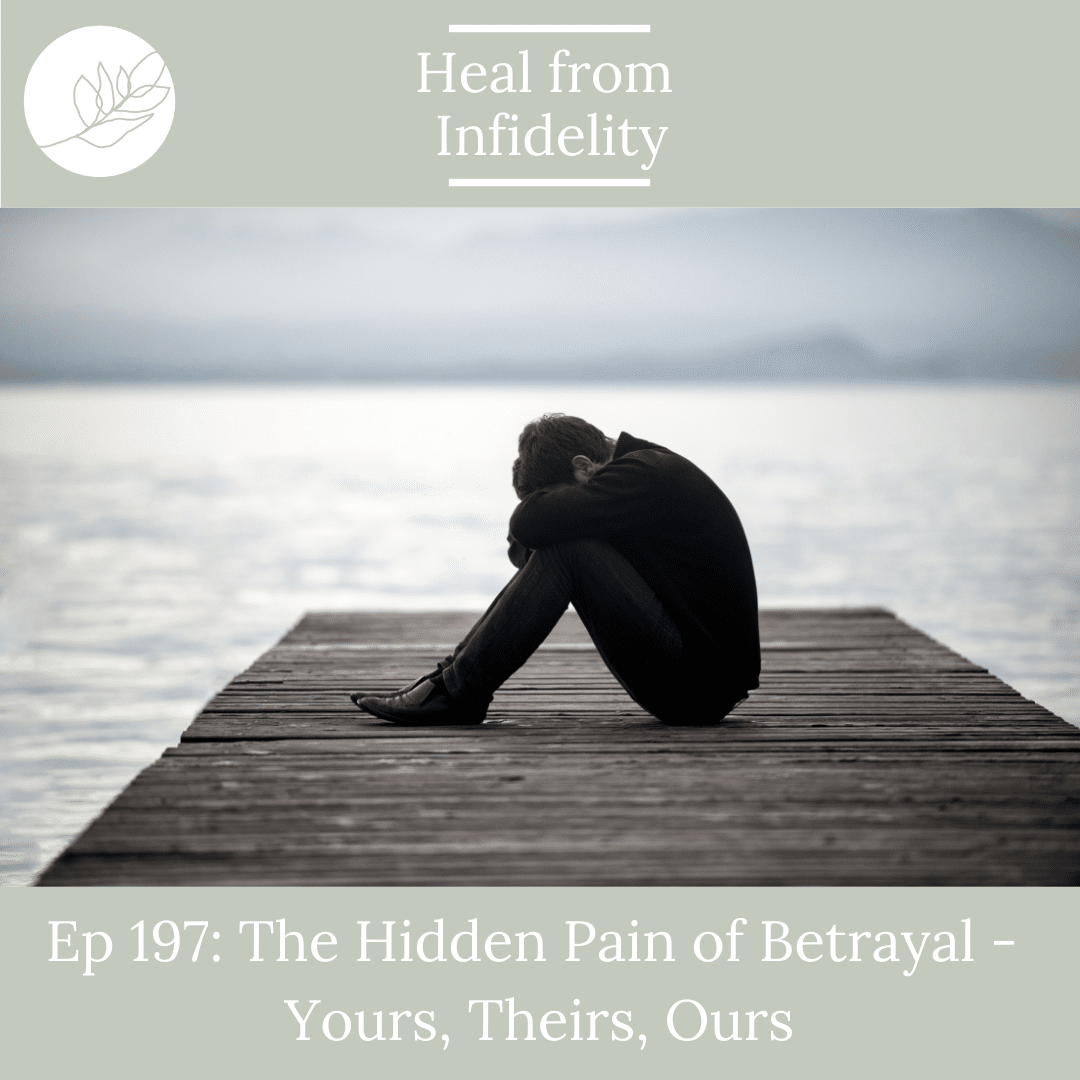
 In this episode, we look at the hidden pain of betrayal, emphasizing that both the betrayed and the betrayer experience deep emotional turmoil. We explore the myths surrounding infidelity, the importance of facing one’s pain, and the necessity of mutual understanding in the healing process.
Key Takeaways:
- Betrayed partners often feel worse while the betrayer appears unscathed.
- Pain avoidance leads to deeper issues later on.
- Indicators of healing include facing pain honestly and openly.
- Mutual understanding of pain is crucial for healing.
- Compassion does not mean excusing harmful behavior.
- Healing requires acknowledging grief and loss.
- Both partners must confront their own pain for true healing.
- Real change involves recognizing the impact of one’s actions.
- Healing is a choice that requires active participation.
- Understanding each other’s pain can liberate both partners.
More from me:
- Sign up for the “Heal on the Go – Audio Membership” here: https://portal.andreagiles.com/offers/9tSEsULS
- Sign up for the $47 class “Decide: How to Commit to Staying or Going After Infidelity” here: https://portal.andreagiles.com/decide
- Apply to join the Get Your Life Back After Infidelity group program here: https://andreagiles.com/get-your-life-back/
- Follow on Instagram at: https://www.instagram.com/theinfidelitycoach/
Episode Transcript
I’m Andrea Giles and you’re listening to the Heal from Infidelity podcast,
episode number 197, the Hidden Pain of Betrayal – Yours, Theirs, Ours.
Hello and welcome to the Heal from Infidelity podcast for courageous women
learn not only to heal from their spouse’s betrayal, but to become the
boldest, truest, most decisive and confident versions of themselves ever.
If you know there’s more for you than the life you’re currently living but
don’t quite know how to get there, you are in the right place. Stick around
to learn how to create a life that will knock your own socks off. Is it
possible? It is, and I’m here to show you how I’m your host, Andrea Giles.
Are you ready? Let’s dive in.
(00:51):
Hello, my beautiful listeners. Thank you for coming back to yet another
episode of Heal from Infidelity. It’s so crazy to see that we’re inching
our way up to 200 episodes. We’re only a few episodes away from 200. Isn’t
that wild? Pretty fun. Thank you for being here. If you have enjoyed this
podcast, I invite you to go review it. Go give it a review. I know it can
feel cumbersome to go in and do it, but it really does matter. It really
does. Get the message out there to other people that this is something
valuable, something worth listening to. Go ahead and get the review out
there. It helps me out, helps the business out, helps people who are
looking for infidelity help to know that we’re legit over here and that
this is a worthy place to spend their time. You can go in and change your
name so that it’s an anonymous name so that you don’t have to have your own
name in there.
(01:44):
That’s an easy thing to do. You just go in and there’s a little button you
push that allows you to change it anyway, okay, so hopping in. There’s
something that’s been on my mind that I’ve been talking about with my
clients about pain and after infidelity, something that I hear so much from
my clients who have been betrayed. I feel worse, and they seem to be
unscathed. They seem like nothing has changed for them and that they’re
doing better and they can just move on and that they’re fine, and I’m here
to tell you that that is just not quite true. That’s just not quite true.
We’re going to talk about this today. We’re going to talk about the reality
that people do not go and have affairs or different varieties of infidelity
when they are not in a place of pain. It may not look like pain.
(02:37):
They may look like they’re doing great. They may look like they’re on top
of the world and everything is great. I want to break this down for you
today. In reality, their pain is likely equal to yours even if you can’t
see it. So first of all, part one here, the myth that they’re fine. It’s so
easy to look at them going to work, working out, scrolling their phone,
sleeping, just fine at night, eating just fine and think, how can they act
like this when I am dying, I am dying over here, and how can they just act
like everything’s fine? Here’s what I want you to know. What looks like
calm is often shut down. What looks like normal is often very deep
disconnection. They may not feel the full weight of what they did yet or
they’re doing everything they can to avoid it because facing it would mean
facing who they were being.
(03:37):
When they made those choices, it would mean looking at how they betrayed
not just you but themselves and even deeper than that, answering the
questions of why? What was it that I was seeking? What was I looking for?
And facing all of that and facing the truth about different pains in their
life that likely go way, way back, long before you came into the picture
and really acknowledging those pains and feeling those pains and dealing
with them. Their pain is equal, but it’s different. It’s different. It
manifests differently. Pain isn’t just tears. Pain can be shame. That is so
deep that it feels like death that really going into that place of shame
feels like death. I will do everything I can to not go there. It can be
self-loathing, it can be regret, it can be terror of losing everything or
guilt so overwhelming that the only way to survive is to numb it out, to
keep busy, to use words.
(04:46):
Can we just move forward now? Can we just get on with it? Avoidance of pain
does not erase it. It just delays it. It puts it off, and when it shows up,
it is much, much heavier because it’s been hiding under layers of blame and
justification and compartmentalization. When it shows up, it can feel so
overwhelming, so just like betrayed partners to have ways of avoiding pain
such as rumination, trying desperately to control outcomes, clinging to
certainty, betraying partners avoid pain too. I want to pause here for a
minute and talk about that. Betrayed partners do these things, rumination
trying to control outcomes. Why? Because we are so afraid of facing the pain
of things not going the way we want them to. If I show up in this way, if I
keep looking at his phone, if I keep checking and thinking about it
constantly, then it’s going to help eliminate the risk that he’ll do it
again.
(05:50):
I’m going to make sure that he’s on track. I’m going to make sure he’s
doing his work. I’m going to make sure he gets the help. I got to know, and
really what we’re doing by staying in that place is we are actually
avoiding our own pain because part of facing our own pain is facing head on
the risk of not knowing yet how this thing is going to go down. That’s part
of facing pain, so the partner might minimize what happened. They might
defend themselves endlessly or go into despair and hopelessness so that they
don’t actually have to take responsibility and that likely doesn’t feel
great to the one who was betrayed because it’s like, I need to see that you
understand? I need to see that you really, really get it here and that all
of this isn’t for nothing. Right? Okay, so what are indicators of real
healing?
(06:46):
How do you know if the person who betrayed you is actually healing? Here’s
a couple indicators. One, they’re facing their pain with honesty. They’re
not just feeling bad that they got caught. They’re feeling heartbreak for
what they did for the harm they caused and for the parts of themselves they
abandoned along the way. I’m telling you, there’s so much self-abandonment
in cheating. There’s so much self-abandonment because it is believing that
they don’t have within themselves or within the relationship enough to feel
good about themselves and that they need to go elsewhere for it and end up
causing so much more pain, so much more suffering for themselves, for other
people and recognizing that is a bitter pill to swallow, knowing that they
really lost sight of who they are, what they want, who they want to be can
be brutally painful and partly not wanting to be faced because it’s so
painful, but for the betrayed partner, they do need to see.
(07:52):
They do need to see is this somebody who is actually willing to face their
pain, not just in those initial days of getting caught, but over time are
they growing into somebody who can come to me and say, Hey, I was thinking
about this situation and I remember that I did this thing and this is what
was going on for me, and now that I can see it, I just shake my head and
go, wow, wow. What was I thinking? But they’re able to tell you about it.
They’re able to come and talk to you about it, and that is such an indicator
of healing that they can come and talk about it, that they can bring it up,
that they can randomly go, I’m so sorry. I’m so sorry for the pain that
I’ve caused and I’m here and I love you and I care about you, and that they
recognize within themselves where some of that came from, that they’re not
avoiding looking at it.
(08:42):
They’re not avoiding looking at some of the bigger truths that are painful
to see. Okay. Sometimes what this looks like is when I have people who
really want to hold, for example, their parents on a pedestal that they
want to clinging to this image of their parents as good and solid and
loving, and part of their healing is facing the reality that their parents
were flawed and that sometimes their parents could be cruel and that all is
not as it seems, and that maybe their parents have been more dangerous to
them or hurtful to them in ways that they have been unwilling to
acknowledge, and it can be very painful to face those things, and sometimes
it means shifting family relationships. Sometimes it means not playing the
same part that they always have in being the good son, the good person, the
good brother, and going, actually, this is harmful.
(09:39):
It’s harmful to me, it’s harmful to my family, and I’m going to have to
make some waves in changing this up. Sometimes something that happens is
that my clients will feel abandoned in family situations like let’s say a
mother-in-law can dish it out and can make little passive aggressive digs
and be somewhat controlling, things like that, and historically your partner
has not really stood up to it and is just kind like, ah, that’s just the way
they are. That’s just the way mom is and it’s no big deal, but after this
betrayal you’re looking for, are they willing to face that? Are they willing
to say, no, actually that’s not okay. Actually, it’s time to do things
differently. This is partly how you’ll know. It doesn’t mean that they are
taking responsibility for your feelings. It’s more that they are willing to
look at the impact of allowing certain behaviors from others to go unchecked
and how it affects all of you, how it affects you, how it affects them,
because chances are they don’t like it either.
(10:44):
Chances are they are afraid to rock the boat for fear of rejection, for
fear of feeling like they’re getting kicked out of their own tribe, but
that is part of facing the pain is going, this actually is painful. This
actually is hurtful to me and I’m willing to own it and respect myself
enough to say this is not working for me, and there’s a lot of healing here
that can be done when we are willing to go deep in and really address our
own pain. Okay? Another indicator that the person who did the betraying is
actually healing is that they’re able to sit with your pain without being
in a hurry to fix it, without trying to defend themselves or blame you.
They can witness your devastation because they’re witnessing their own.
They are feeling their own pain. They’re like, if this hurts me this bad,
imagine how you must feel and they’re able to be a witness to it without
needing to hurry up and fix it or get out of it or try to put a timeline on
it.
(11:46):
They can name the full impact of their choices on your life and their life
without needing to rush past it to feel better. They don’t need to be in a
big hurry. This is real remorse. That’s real change and it’s very painful,
okay? It’s excruciating. It’s excruciating to have some of these
conversations when you are witnessing somebody else’s pain where they are
witnessing your pain. It’s painful and it’s so beautiful and healing at the
same time, so beautiful and so healing where we can set down our own ego and
our own pretenses and our own defenses and just listen to another human
being as they are sharing with us their pain. Okay? Alright. I want to talk
now to the betrayed partner and the importance of feeling their pain too.
They need to hear your pain, but part of healing is being willing to hear
theirs too, and for you, the betrayed partner.
(12:48):
Healing isn’t just about feeling your own pain, it’s about being able to
see their pain too, not from a place of excusing them, but from a place of
truth and honesty. It’s about seeing them as a human being who acted from
disconnection, from fear, from emptiness, from avoidance, from their own
pain. Seeing this does not mean that you stay. Please know this. Seeing it
does not mean that you stay. It doesn’t mean you trust them today. It
simply means that you are rooted in reality, not in the fantasy story of
what we are telling about them, about being so evil and that you’re just a
victim here. Honestly, everybody here is a victim in their own way and one
kind of acted out from their painful places inside. They acted out from the
pain and the betrayed partner is the receiver of their acting out and it’s
not fair and it’s not okay, but that’s really what’s going on.
(13:51):
That’s the truth of it. Here’s what is true. When you can hold awareness of
their pain alongside your own, it frees you from resentment. It frees you
to choose your next steps with clarity and not just from anger. It frees
you up to have more information to go, okay, maybe this person’s not just
this horrible person that’s just this selfish SOB. If we can move past that
into seeing the whole picture of somebody and where they’ve come from and
what pain they’ve been carrying and what pain they have been desperately
trying to get out of by doing the things that they’re doing, it does give
us a fuller picture of who we are with and what they are willing to do.
What you need to know is this person willing to face their pain and then
recognize the impact of their unprocessed pain on other people?
(14:51):
I’m you. I can understand their pain and I’m not willing to stand in the
line of fire again when they are still not addressing it because it creates
more risk for you if they have not tapped into their own pain and really
done their own work in this area to not be such a risk that they’re not
going to need to act out from that pain and keeping you in a place of
going, I’m not quite sure what’s going to be thrown at me this day, right? I
want you to know though that you can be a huge piece of being a witness to
somebody else’s pain that we can offer compassion. It is not excusing it, it
is not excusing it, and we can understand their pain and decide that the
impact for you is too big, that it’s too much, that it’s more than what you
want to risk for yourself, and we can say, I care about you.
(15:47):
I wish you well, and these are things that you’re going to have to solve
outside of this marriage. We get to do that, but choosing to tap into
compassion and understanding and going, if their pain is as big as my pain,
what is their pain? I want to understand this frees you up. It takes you
out of the victim mentality. It takes you out of needing to be right and
they’re wrong and I’m good and they’re bad. It takes you out of that and
into a much more nuanced place of going. In reality, this is the impact of
their unhealed pain and am I willing to continue being on the receiving end
of that if they’re not willing to address their pain, but we can do this
together when we are both willing to have an open heart and go, I want to
know. Tell me about your pain.
(16:37):
Tell me what needs that you had that weren’t being met that you maybe
thought you never could have met, and it goes both ways. What do you want?
What do you need? What did you feel like you couldn’t say? What do you need
now? We can do this work and for sure, getting professional help goes so
far in this so far, right? This is not to put the burden on each other to be
like the therapist or the coach, okay? It’s not to put the burden on. It’s
more to understand and to recognize that we’re not the only one hurting,
okay? So if you are the one who betrayed, I want you to ask yourself, if I
am not feeling pain right now, what am I avoiding? Because true healing
will always involve grief. I’m sorry to say it, but it’s true. True healing
always involves grief.
(17:27):
Why? True Healing is a choice. It’s something that we decide that we want.
It’s something that we step towards that we’re choosing something actively,
and when we are actively choosing something, we are actively un something
else. We are saying no to something else, and when we say no to something
else, we have to the thing that we’re saying no to or the thing that we are
losing because of our choice, you can feel grief for what was lost in the
relationship. Grief, so much grief for the harm that you caused. Sometimes
we don’t want to step into this place of healing because we don’t want to
feel the real weight and go, oh my gosh, I have to face who I’ve been and
how deeply I’ve hurt this person. Grief for the parts of yourself that you
abandoned to being someone who betrayed, and if you’re the one who got
betrayed, their healing is not your job, okay?
(18:25):
Their healing is not your job, but your compassion, even if it’s just
quiet, compassion in your own heart can liberate you. It can free you
because real healing is not at all about seeing them suffer. It’s not at
all about seeing them suffer. Real healing is about becoming someone who can
hold the full truth. There’s yours, the entire picture without it destroying
you, that you can hold it, that you can hold all the emotion that comes up
as you see all sides of this situation. That is part of real healing. The
truth about infidelity is that it reveals pain on every side. The question
here is, am I going to use this pain to awaken to a deeper truth or am I
going to keep covering it up? Will you choose the path that transforms you
or the path that keeps you trapped in pain and avoidance?
(19:19):
Healing means facing what you’d rather avoid in yourself and in each other
and sitting with it, expanding in your truth telling of looking at that
pain and ultimately deciding how you want to lead yourself out of that
pain. What do I want to do with this pain? Here it is. What do I want to do
with it? What healing needs to take place? Not to avoid feeling this way,
but to actually help heal this pain. Okay? If this resonates with you, those
of you who have been betrayed, I invite you to apply for my Get Your Life
Back After Infidelity Program. Part of what we do in this program, one
whole section of it is about facing truth. It’s about facing truth, facing
pain, really opening ourselves up to all of it so that we can understand
beyond our pain, beyond our pain, what it is that we actually want, what
actually happened here.
(20:18):
We have to feel our own grief about how did I let myself become so
disengaged or disconnected with the things that I want? How was I just
going along with things that have not been working for a long time and why
did I do that? That’s some of the pain, the identity shift that comes up
with this of going, okay, these are not what I thought they were, so what
is true? There’s a lot there that needs to be faced, and this is some of
the biggest work that we do inside the Get Your Life Back After Infidelity
Program. Get your applications in, and we’ll get you in to this program. It
will help you with this tremendously. Okay. Thank you so much for being
here today, and again, if you want to go deeper, go ahead and apply for the
program and I will see you next time. Thank you so much for being here.
Thank you for listening to the Heal from Infidelity podcast. If you would
like to be kept in the know about upcoming free classes, new podcast
episodes, and other ways of working with me, go subscribe to my weekly
email. You can subscribe@andreagiles.com slash lies about infidelity slash.
Again, it’s andrea giles.com/lies about dash infidelity slash I will see
you next time.
